

How to Configure a Rigid Box Making Machine Production Line
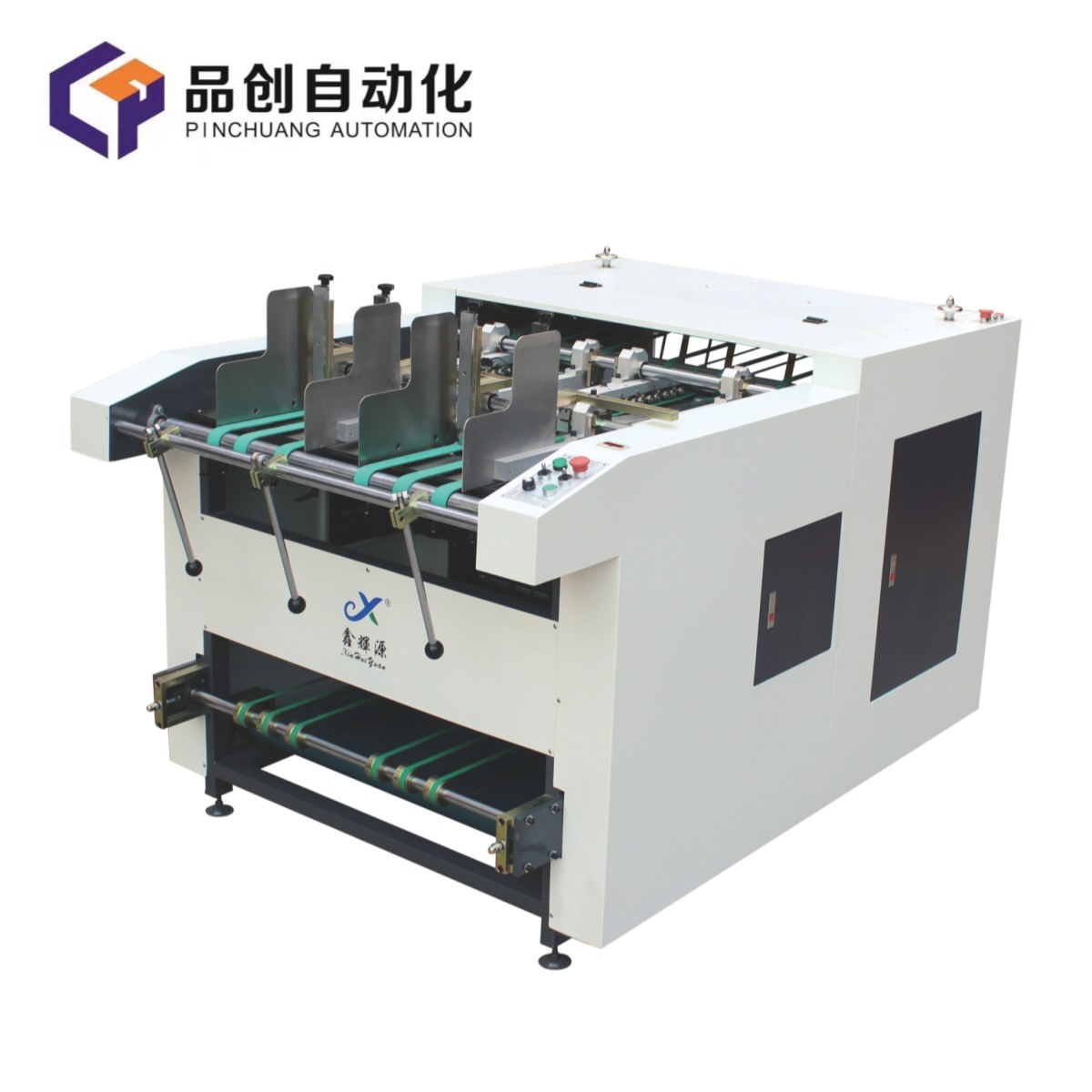
A rigid box making machine production line is balanced around the slowest station, not built from a list of attractive machines. Get the balance right and output rises predictably with demand; get it wrong and the plant owns equipment it cannot feed.
At Pinchuang we configure these lines for packaging plants and print finishers, usually starting from a box specification rather than a machine preference. This guide sets out how to work station by station, how to match capacity between them, and what to decide about layout, buffers and manpower before anything is ordered.
How to Configure a Rigid Box Making Machine Production Line
Start with four numbers, because every station choice follows from them: the smallest box you expect to run, the largest, the annual volume of each, and the number of size changes per week. Without those, any configuration discussion is guesswork dressed as planning.
The next step is material. Board thickness narrows the choice of grooving and corner pasting equipment; wrap weight narrows the choice of gluing and forming. A line specified for 1–3 mm board and 80–200 g/m² wrap will behave differently if production later moves to heavier board, and the time to find that out is before the order, not after.
Finally, decide what you are not buying yet. Most plants add stations in stages, and a line designed with the end state in mind but bought in two phases is easier to extend than a line bought whole and then re-arranged.
Station by Station
A full line moves board and wrap through six stations and one control point. Each one changes what the next station can accept, so the sequence matters as much as the individual machines.
1. Grooving
A V grooving machine cuts the fold lines that let a wrapped board turn cleanly into a box. Groove depth and position decide the corner quality downstream, and a groove that varies shows up as an uneven lid two stations later.
2. Gluing
The wrap picks up an even adhesive film. This is the least glamorous station on the line and the one that most often decides whether finished boxes stay flat in a warehouse, because an uneven film pulls the board as it dries. A dedicated paper gluing machine feeding the line removes that variable.
3. Box making and positioning
The board is placed on the glued wrap and located before wrapping. Mechanical referencing holds around ±0.50 mm; a visual positioning machine reading printed marks holds about ±0.1 mm, which is the difference between a patterned wrap that looks designed and one that looks slightly off. Our main rigid box making machine platform is normally specified with the vision option for this reason.
4. Forming
The wrapped board is pressed into a three-dimensional box. A rigid box forming machine sets the wall height and corner definition, and its cycle time usually becomes the pace of the whole line.
5. Corner pasting
Tape is applied to strengthen the corners, either inline or as a separate pass. A corner pasting machine is often the fastest station on the line, which means it is rarely the constraint — unless board sizes or tape width force it to run slower than its rated speed.
6. Assembly and quality control
Finished components meet, whether that means a lid and base or a box and its insert. Where this is automated, a box assembly machine keeps pace with forming; where it is manual, it becomes the hidden bottleneck that appears only on peak weeks. Quality control sits here as well, and it should measure the box against the specification rather than against the operator's eye.
Matching Capacity Between Stations
Feeding capacity is where most new lines are lost. A machine rated at 40 pcs/min only produces 40 pcs/min if the station before it can supply boxes at that rate, and if the station after it can take them away.
| Station | What limits it in practice |
|---|---|
| Grooving | Number of grooves per pass and the number of panels per sheet |
| Gluing | Wrap weight and how evenly the film has to be applied |
| Box making | Box size within the machine's range and the positioning method fitted |
| Forming | Wall height and how square the wrapped board arrives |
| Corner pasting | Tape width and board size, not the rated cycle alone |
| Assembly and QC | Operator count and the inspection standard applied |
The practical method is to write down the realistic rate for each station on your actual box mix, not the catalogue maximum, and then look at the smallest number. Some plants solve a forming bottleneck by adding a second forming station, which is exactly what a double-station platform is for; others solve it by moving corner pasting offline so the forming station is never starved. Both are valid, and the right answer depends on which station you can physically add later.
Layout, Buffer and Manpower Planning
Once the stations are chosen, three practical questions decide whether the line runs smoothly on a Monday morning.
Layout
Draw the line at true scale, including service access, control panel positions and the space needed to change a mould. Machines are quoted by footprint, but the footprint is rarely the constraint; access is. A forming station that cannot be reached from three sides will cost time at every changeover.
Buffers
A small buffer of work in progress between two stations absorbs short stops and prevents one fault from idling the whole line. The buffer does not need to be large: enough pieces to cover a two-minute intervention is usually sufficient, and any more simply hides the bottleneck rather than solving it.
Manpower
Count the operators needed for loading, inspection and packing rather than for machine tending. On most automatic lines the machines need attention at changeover and at fault, not continuously, so the staffing question is really about who handles material in and out. Plants that plan one operator per machine usually overstaff and then discover the real constraint is where material enters and leaves the line.
Pinchuang has built this equipment in Dongguan since 2008, manufactures in a 10,000 m² facility with more than 100 employees, and supplies over 30 countries. We exhibit at All in Print China, Printing South China, China Print, Drupa, SINO FOLDING CARTON and WEPACK.


These four machines cover the head, middle and end of a typical configuration. The combinations we are asked for most often, and the order in which plants usually add them, are collected on our applications page; reading a few layouts makes the planning conversation much shorter.
Common Questions About Line Configuration
Should I buy the whole line at once?
Usually not. Most plants start with forming or box making and add gluing, grooving and corner pasting as volume justifies them. Buying everything on day one locks in capacity you may not be able to feed and makes the first fault harder to trace.
How do I find my bottleneck without software?
Record the actual output of each station for one shift on your normal mix, and record the reasons for every stop. The station with the longest total stopped time is your constraint, and it is usually not the one that looks slowest on paper.
Is a double-station machine always better for volume?
Only when forming is your constraint and your box range suits the machine's working limits. A second station adds output but also adds footprint and changeover work. If your constraint is gluing or inspection, a double-station platform will not help at all.
How much buffer should sit between stations?
Enough to cover a short intervention, typically one to two minutes of output, and no more. A large buffer feels safe but hides the real constraint, so problems surface later and larger. Small buffers make the line honest.
Send Pinchuang your box sizes, materials and weekly volumes. We will map a rigid box making machine production line station by station, name the constraint and show where the line can be extended later.
Plan your line with us See every station we build